
🍳 Designing for the Chef: How to Plan Your Kitchen Around Your Cooking Style

Your kitchen isn't just a showroom—it's your culinary engine room. While aesthetic appeal is crucial, a truly successful kitchen design must prioritise functionality, making the space intuitive, efficient, and enjoyable for the person who uses it most: the cook.
At Saturn Kitchens, we tailor every design to the client’s lifestyle. Here is your guide to planning a highly functional kitchen, focusing on smart storage and optimised layouts.
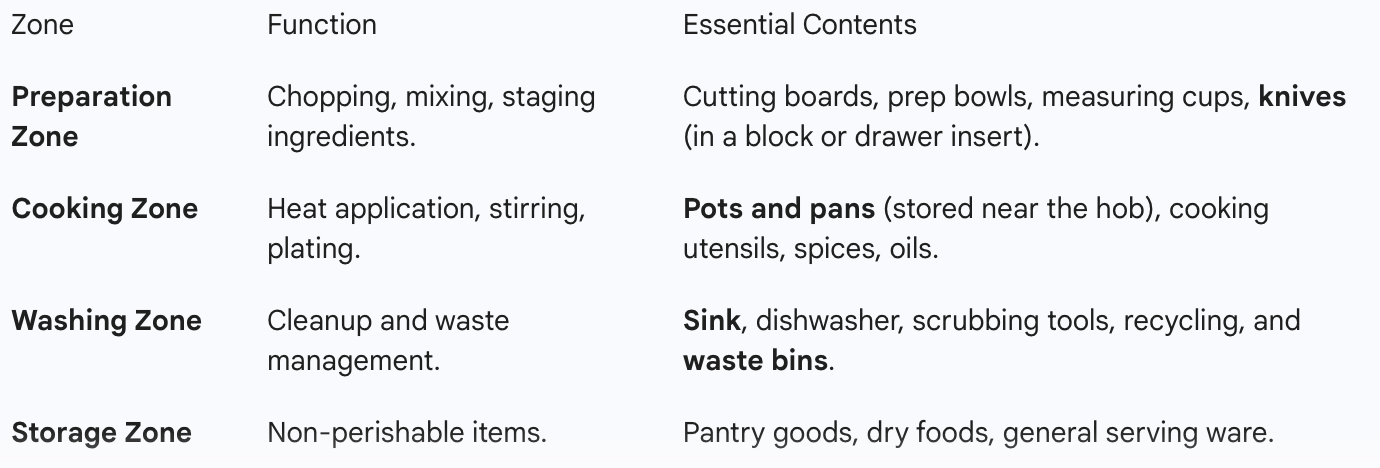
1. The Power of Zone Planning: Everything in its Place
Forget scattering items randomly. A professional kitchen is organised into dedicated zones, and yours should be too. This streamlines your workflow, saving you countless steps during meal prep and cooking.
2. The Golden Rule: The Kitchen Work Triangle
The most fundamental concept in functional kitchen design is the Kitchen Work Triangle. This refers to the distance and path between the three most frequently used appliances: the cooktop/oven, the refrigerator, and the main sink.
The Goal: The triangle should be small enough to allow quick movement but large enough that multiple people can work without crowding.
Optimal Dimensions: Each leg of the triangle should ideally measure between 4 feet (1.2m) and 9 feet (2.7m). The total perimeter should not exceed 26 feet (7.9m).
If your layout is linear (like a galley kitchen), this concept is adapted into a straight "work line" to maintain efficiency.
3. Smart Appliance Placement for Peak Efficiency
Where you place your core appliances dictates the efficiency of your cooking flow.
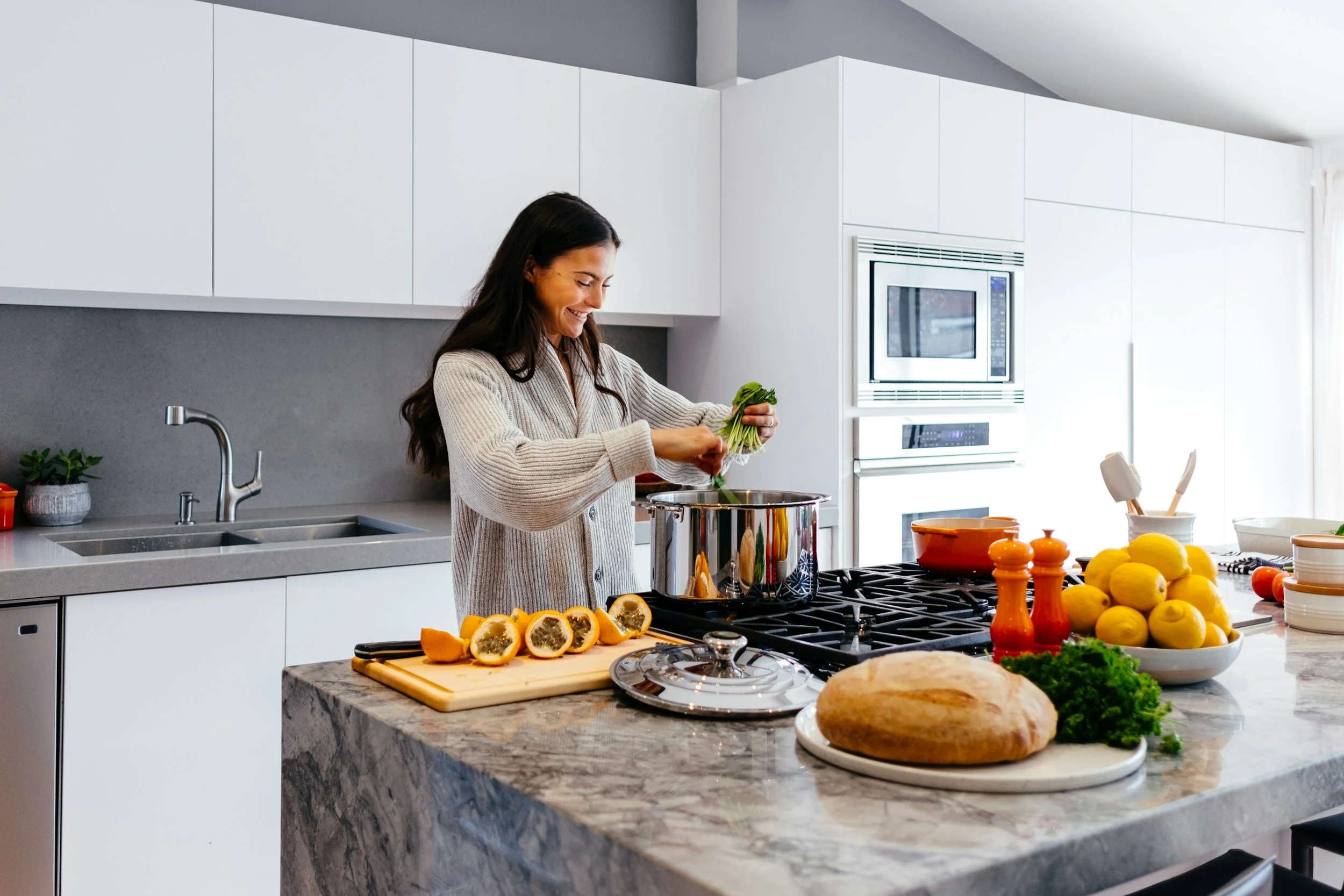
Oven and Microwave: Placement is key for ergonomics. Placing the oven at eye-level in a bank of tall units eliminates bending and makes checking food safer and easier. The microwave should also be elevated (off the counter) within easy reach of the prep area.
Refrigerator: The fridge should be easily accessible to the prep zone and often near the entrance of the kitchen for quick access to drinks and snacks without interrupting the cook.
Pots, Pans, and Knives:
Pots and Pans should be stored directly underneath or immediately adjacent to the hob/cooktop. Deep, pull-out drawers are far more accessible than traditional cupboards.
Knives should be stored safely near the main prep surface—in a dedicated drawer insert or knife block.
4. Waste Management: Integrating Your Bins
Don’t let your bins become an afterthought. Smart waste disposal is crucial for hygiene and efficiency.
Placement: The main waste and recycling bins should be integrated into a pull-out drawer immediately adjacent to the main sink and prep area. This allows you to scrape food scraps and packaging directly into the bins without drips or unnecessary movement.
Variety: Plan for separate compartments for general waste, recycling, and sometimes, a dedicated compost bin.
5. The Saturn Kitchens Difference
Designing a kitchen that balances form and function requires expertise. Our designers focus on how you cook—whether you’re a keen baker, a frequent entertainer, or someone who loves simple weeknight meals.
We translate your habits into a bespoke layout, ensuring every element, from the flow of the work triangle to the placement of your knives, is optimized for your life.
Ready to design a kitchen that works as hard as you do? Contact Saturn Kitchens today to book your consultation and take the first step towards a truly functional and beautiful space.
Contact us today for a free consultation on your full kitchen renovation project and discover the Saturn difference!